
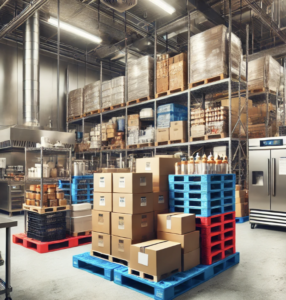
Restaurants live and die by consistency. Ingredients arrive on time, stay safe, move quickly, and remain organized from receiving to storage to prep. When the back-of-house runs clean and predictable, the front-of-house stays calm and guests feel it. One of the most overlooked tools that supports that consistency is the pallet under the product. When a restaurant starts looking for Plastic Pallets for Sale, it is usually because the team has outgrown the headaches that come with wood pallets, messy storage areas, and preventable food-safety risks.
Plastic pallets bring a level of control that fits modern restaurant operations, especially in a world where supply chains are tighter, inspections are serious, and brand reputation is built online every day through what guests experience and what the industry is talking about in restaurant media. The right pallets do not just hold product. They protect inventory, reduce cleanup, improve organization, and support the systems that keep a restaurant profitable.
A Cleaner Receiving Area That Stays Guest-Ready 🧼
Restaurant deliveries are nonstop. Produce, proteins, dry goods, beverages, disposables, and cleaning supplies all flow through the receiving zone. Wood pallets can splinter, shed debris, absorb moisture, and hold onto odors. That creates extra sweeping, extra headaches, and extra risk.
Plastic pallets are designed to be easier to clean and sanitize. They do not splinter, and they handle wet environments better, which matters when receiving happens near dish areas, walk-ins, mop sinks, and anywhere condensation or spills show up. When a restaurant chooses Plastic Pallets for Sale, the goal is often a receiving routine that is faster, cleaner, and easier to standardize across shifts. That cleanliness also supports a stronger food-safety culture, which is a constant topic in restaurant industry coverage and operator guidance such as the National Restaurant Association’s updates and resources. National Restaurant Association
Food Safety and Storage Control That Reduces Risk
Storage is not only about fitting more product into less space. It is about keeping food protected and separated, minimizing contamination risk, and maintaining predictable rotation. Moisture and bacteria risk increase when pallets are dirty, damaged, or impossible to sanitize properly. Plastic pallets help create a more controlled storage environment because they are consistent in shape, stable, and easier to keep clean.
That matters for walk-in coolers, freezers, and dry storage. Plastic pallets can support better airflow under product, keep cases off the floor, and help staff maintain clearer lanes and sections for FIFO rotation. When the storage room is organized, inventory counts go faster, shrink goes down, and ordering becomes more accurate. Those are the operational fundamentals that industry publications track closely as restaurants navigate rising costs and changing consumer expectations. Nation’s Restaurant News
Less Product Loss, Less Labor Waste, More Predictable Margins
Restaurants do not only lose money from spoilage. They lose money when product gets crushed, torn, soaked, or contaminated. They lose money when staff has to re-stack unstable pallets or re-box damaged cases. They lose money when an entire section of storage gets reorganized because the base layer was compromised.
Plastic pallets are consistent and durable, which reduces the chance of uneven stacking and load shifting. That consistency helps prevent crushed packaging and broken cases, especially in beverage storage, bulk dry goods, and high-volume commissary-style setups. It also reduces the small labor drains that add up, like rewrapping, restacking, sweeping debris, and dealing with splinters and broken boards.
Restaurant operators constantly look for operational wins that do not require reinventing the menu. The best wins are simple systems that protect time and inventory. That kind of behind-the-scenes efficiency is the same kind of practical advantage highlighted across restaurant business coverage and operator analysis. Restaurant Business
A Safer Back-of-House That Supports Faster Movement
Slip-and-fall risk, trip hazards, and unstable stacks are real problems in busy kitchens and storage areas. Wood pallets can break unexpectedly, leaving sharp edges, exposed nails, and uneven surfaces. Plastic pallets are built for stability and uniformity, which supports safer movement with pallet jacks, carts, and hand trucks.
Safety is not only about avoiding accidents. It is about maintaining speed. When staff trusts the setup, they move faster and more confidently. When managers trust the storage systems, they spend less time policing the same issues. This becomes especially valuable for quick-service and fast-casual brands that rely on speed, consistency, and repeatable systems across locations. QSR Magazine
Supply Chain Flexibility for Modern Restaurant Operations 📈
Restaurants are adapting to more complex supply chains. More vendors, more deliveries, more packaging formats, more third-party distribution, and more pressure to keep everything trackable and clean. Plastic pallets support that shift because they are commonly used in more controlled logistics environments, and they fit well in operations that care about standardization.
For restaurants that run catering, multiple locations, food trucks supported by a commissary, or high-volume takeout, pallets are part of the infrastructure. Choosing Plastic Pallets for Sale becomes a practical move to support growth without adding chaos. It is also a smart way to reduce friction between the restaurant and its suppliers, because consistent pallet systems help create a smoother receiving and storage rhythm.
Industry-focused restaurant news outlets regularly cover how operators are modernizing systems behind the scenes, including equipment choices and supply chain adjustments. When an operator invests in operational infrastructure, it shows up in consistency and guest experience. RestaurantNews.com
Better Brand Standards From Back Door to Dining Room
Even though guests rarely see the receiving door, they feel the ripple effects of how that space runs. A cleaner, more organized back-of-house supports better food quality, faster ticket times, fewer stockouts, and fewer “86” moments during peak hours. It also supports staff pride, which impacts turnover and training outcomes.
Plastic pallets contribute to that standard because they help a restaurant keep storage areas cleaner, reduce clutter, and maintain clearer processes. For multi-unit operators, consistency is everything. A standardized choice like plastic pallets supports repeatable training and predictable outcomes across locations.
A restaurant is not only a place that serves food. It is an operational system that protects a brand promise. The same way the public definition of a restaurant centers on service, food, and hospitality, the real difference-maker is often the operational discipline behind it. Restaurant 🙂
Conclusion: Plastic Pallets for Sale Are a Practical Investment in Restaurant Stability
Restaurants win when the basics run smoothly every day. Clean receiving, safe storage, protected inventory, faster movement, fewer preventable messes, and better consistency across shifts all create the kind of operation that can handle pressure and still deliver a great guest experience.
Plastic Pallets for Sale near me are not a trendy upgrade. They are a practical operational tool that helps restaurants control food-safety conditions, reduce waste, improve storage discipline, and protect margins. When the foundation under your inventory is cleaner, stronger, and easier to manage, everything above it runs better. That kind of stability is what keeps restaurants competitive in an industry that moves fast and is constantly evolving. ✅