






Posts in Category: Online Marketing News

Why Online Marketing Matters for New York Owners Representation

Online Marketing News for New York Owners Representation

New York construction and real estate projects rarely leave much room for error. Budgets are substantial, schedules are demanding, regulations can be complex, and the number of people involved in a single project can quickly multiply. Owners need experienced professionals who can protect their interests, coordinate the moving parts, watch costs, communicate with project teams, and keep the work focused on the owner’s original goals.

At the same time, the way property owners, developers, investors, institutions, and corporate decision-makers find those professionals has changed dramatically. A strong reputation built through referrals still carries enormous weight, but referrals now frequently lead to an online search. A recommendation may introduce an owner’s representative, but the website, search results, professional content, company history, and digital presence often influence what happens next.

That is why online marketing has become increasingly important for firms providing New York Owners Representation. It gives experienced firms an opportunity to demonstrate their capabilities long before an introductory meeting takes place and allows potential clients to understand why professional owner-side representation can make such a meaningful difference on a project. 🏙️

The First Impression Often Happens Online

Years ago, a property owner might have learned about an owner’s representative almost entirely through architects, attorneys, contractors, investors, or other professional contacts. Those relationships remain important in New York, but they are no longer the entire journey.

A potential client who hears a company’s name can immediately search for it. Within minutes, that person can review the firm’s website, services, leadership, project experience, articles, industry knowledge, and overall professional presentation.

That digital first impression matters.

Wikipedia’s overview of digital marketing reflects how extensively websites, search engines, content, social platforms, and other digital channels have become integrated into modern marketing. For a professional service as trust-dependent as owners representation, these channels are not merely promotional tools. They are an opportunity to establish credibility.

A website that clearly explains what the firm does, who it serves, and how it approaches complex projects can reinforce the recommendation that brought the visitor there in the first place.

New York Is an Exceptionally Competitive Professional Market

Competition in New York is intense across almost every professional category. Construction management, architecture, engineering, development, commercial real estate, project consulting, and owners representation are no exceptions.

Companies competing for sophisticated clients have to demonstrate why they deserve attention.

New York City’s own Department of Small Business Services business courses include education involving digital marketing, branding, public relations, websites, social media, search engine optimization, and digital performance indicators. The broader lesson applies beyond small businesses. Organizations of virtually every size now operate in a marketplace where online visibility and brand presentation influence how they are discovered and evaluated.

For an owners representation firm, effective online marketing provides room to communicate strengths that may not fit into a short referral or introduction.

A firm can explain its experience with budgeting, scheduling, procurement, design coordination, construction oversight, risk management, reporting, stakeholder communication, and project closeout. It can also demonstrate familiarity with the practical realities of completing projects in New York.

Instead of simply claiming expertise, the firm can show it.

Professional Content Builds Authority Before the First Meeting

Owners representation is not an impulse purchase. Clients are entrusting someone with significant financial, operational, and strategic responsibilities.

That makes educational content particularly valuable.

An article explaining how change orders should be evaluated can demonstrate cost-control knowledge. A discussion of preconstruction planning can reveal how a firm thinks ahead. Content about scheduling, contractor coordination, procurement, budgeting, risk, technology, or project reporting can provide evidence of real-world experience.

Industry publications such as ADWEEK have built their own authority around continual coverage of marketing, advertising, brands, media, and emerging communication trends. The same underlying principle works on a smaller scale for professional firms. Consistently publishing useful, relevant information gives an organization a body of work that demonstrates what it knows.

For owners representation, that content should not sound like advertising disguised as an article. The strongest material solves problems, explains complicated subjects clearly, and gives owners information they can actually use.

That is the kind of content people remember, share, reference, and return to. 📈

Search Visibility Connects Expertise With Client Intent

Search marketing is especially valuable because it can place a company in front of someone who is already looking for information.

A person searching for help managing a New York construction project has very different intent from someone who happens to see a general advertisement. Searchers may already have a building under consideration, a renovation approaching, a budget problem, an upcoming capital project, or a complicated project that needs stronger oversight.

Strong online content creates more opportunities for a firm to appear during those research moments.

Coverage from Marketing Dive continually illustrates how search, social media, creative strategy, analytics, and changing digital habits remain central to modern marketing. The tools continue to evolve, but the basic objective remains remarkably consistent: businesses need to be visible where their audiences are spending time and gathering information.

For owners representation firms, that means developing online resources around the concerns real owners have throughout the life of a project rather than filling a website with repetitive sales language.

A Strong Digital Presence Reinforces Trust

Trust is one of the most important assets an owner’s representative has.

The owner’s representative may participate in major financial discussions, review contracts and proposals, coordinate consultants, track schedules, identify project risks, review change orders, attend critical meetings, and help the owner make consequential decisions.

The company’s online presence should reflect that level of responsibility.

Professional design matters, but trust requires more than an attractive website. Project descriptions, leadership information, useful articles, clearly explained services, credentials, accurate contact information, and consistent messaging all help establish legitimacy.

The New York City Department of Small Business Services’ outreach campaigns provide a useful example of how organizations use coordinated messaging across multiple channels to reach specific audiences. Consistency matters because people rarely encounter a business through only one point of contact.

A potential client may discover a firm in search results, visit its website, read an article, see the company mentioned somewhere else, and later return directly. Every encounter contributes to the impression that follows.

Online Marketing Can Explain the Value of Owners Representation

One challenge within professional services is that prospective clients do not always understand the full scope of a service before they need it.

Someone may understand what an architect or general contractor does but have a less complete picture of an owner’s representative’s role.

Digital marketing gives firms enough space to explain that role properly.

The owner’s representative works from the owner’s side of the table. The focus is on protecting the owner’s goals and helping the project move from planning through execution with stronger oversight, communication, accountability, and coordination.

Articles and service pages can explain situations where owners representation becomes especially valuable, including major renovations, new construction, corporate facilities, institutional projects, complex stakeholder environments, aggressive schedules, large capital expenditures, and projects requiring coordination among numerous consultants and contractors.

That education has value even before a visitor becomes a client.

Digital Advertising Continues to Compete for Serious Business Attention

The scale of digital advertising also demonstrates how aggressively organizations are competing for online attention.

Reuters reporting on the digital advertising market described the enormous advertising revenue associated with platforms such as Meta and Google and the continued competition for digital advertising dollars. That level of investment is a reminder that online attention has become economically valuable across industries.

Owners representation firms do not need to approach marketing like consumer brands. In fact, doing so could weaken the professional image they are trying to create.

Their advantage is specialization.

Rather than trying to reach everyone, an owners representation firm can build content around the needs of developers, property owners, corporations, institutions, investors, and organizations preparing for substantial construction or renovation projects.

Relevance is more valuable than sheer volume.

Marketing Data Creates Opportunities to Improve

Traditional networking remains important, but it can sometimes be difficult to measure precisely why one introduction produces a client while another does not.

Digital marketing provides additional information.

Companies can evaluate which service pages attract visitors, which articles generate interest, which searches bring people to the website, how visitors move through important pages, and which subjects consistently generate engagement.

That does not mean every marketing decision should be reduced to a dashboard.

It means firms can combine professional judgment with evidence.

New York University educational resources on digital marketing emphasize subjects such as buyer journeys, campaign strategy, websites, paid media, social campaigns, analytics, and emerging technologies. Those disciplines encourage businesses to view marketing as an ongoing process that can be evaluated and refined rather than a one-time promotional effort.

An owners representation firm can use the same mindset. If potential clients consistently respond to content about project cost control, the firm can expand that resource. If scheduling information attracts substantial attention, additional articles can explore scheduling risks in greater depth.

The website becomes smarter over time because the company learns which parts of its expertise matter most to the people searching for help.

Online Visibility Supports Relationships Rather Than Replacing Them

Construction and real estate remain relationship-driven industries, particularly in New York.

Online marketing does not eliminate referrals, networking, reputation, or face-to-face relationships. It strengthens them.

A referral backed by a sophisticated website becomes more persuasive. A networking introduction supported by meaningful project content carries more depth. A prospective client who has already read several useful articles may enter the first meeting with greater confidence in the firm’s abilities.

Even New York City’s business-growth resources recognize the importance of combining different approaches. The city’s Planning for Business Growth marketing guidance discusses advertising, publicity, promotional strategies, internet visibility, social media, networking, and other methods as components of a broader marketing toolkit.

That combination makes sense for owners representation.

The human relationship remains central. Digital marketing helps establish the conditions under which that relationship can begin.

Reputation and Visibility Work Together

A firm can have tremendous experience and still remain nearly invisible online.

Another company can have excellent online visibility without the depth of experience necessary to support its claims.

Long-term success requires both substance and visibility.

For established owners representatives, online marketing provides a way to turn years of experience into resources that future clients can discover. Completed projects become case studies. Lessons learned become articles. Frequently encountered challenges become educational pages. Specialized experience becomes a competitive distinction.

Over time, those resources create a stronger digital footprint around the firm’s actual expertise.

The objective is not to appear everywhere. It is to be present when the right owner begins looking for the right kind of help.

Conclusion

New York projects can involve enormous investments, complicated schedules, numerous stakeholders, regulatory considerations, and decisions that have long-term financial consequences. Owners representation exists to give owners experienced advocacy and oversight throughout that process.

Online marketing helps make that expertise visible.

A strong website, useful educational content, search visibility, professional branding, project information, consistent communication, and an established digital reputation allow potential clients to understand a firm’s value before the first conversation ever occurs.

The most effective approach does not replace traditional relationships or attempt to turn a highly specialized professional service into mass-market advertising. It supports reputation with information, backs referrals with evidence, and gives experienced owners representatives a platform for demonstrating what they know.

In a market as competitive and connected as New York, being highly capable is essential. Making that capability easy to discover has become important too. 🗽

Online Marketing for B315 Circuit Breakers: How Smart Product Pages Help Buyers Find the Right Breaker Fast

Online Marketing News for B315

In the electrical supply industry, customers are usually not browsing casually. They are searching with a specific need, a specific part number, and often a specific deadline. When someone searches for a circuit breaker, especially a model like B315, they are usually trying to solve a real problem quickly. They may be replacing a failed breaker, sourcing parts for a job, maintaining a panel, or comparing availability between suppliers.

That is where online marketing becomes more than a branding exercise. For industrial, commercial, and electrical supply businesses, strong online marketing helps connect buyers with the exact products they need at the moment they are ready to act. A smart product page does not just list a breaker. It answers search intent, builds confidence, supports purchasing decisions, and makes it easy for the customer to move forward.

The B315 circuit breaker is a good example of why product-specific online marketing matters. Buyers searching by model number are not looking for vague information. They want accuracy, compatibility, condition, pricing, shipping information, and confidence that the supplier understands electrical components. When a product page is built correctly, it can serve both the search engine and the customer without sounding robotic or over-optimized.

Why Online Marketing Matters for Electrical Supply Products

Online marketing is often associated with flashy ads, viral videos, social media trends, and broad consumer campaigns. However, in specialized industries like electrical supply, online marketing works best when it is practical, clear, and search-driven. The goal is not just to get attention. The goal is to help the right buyer find the right product quickly.

A buyer searching for a B315 circuit breaker is showing high intent. They already know the product they need, or they are close to confirming it. This type of search is valuable because it is closer to a purchasing decision than a broad search such as “types of circuit breakers.” A well-built product page can capture that intent by giving the customer useful details, product confidence, and a clear path to purchase.

This is where the principles of online advertising and digital visibility become important. Wikipedia’s overview of online advertising explains how online promotion uses digital platforms to reach audiences across search engines, websites, email, and other channels. For a product like a circuit breaker, the most powerful form of online visibility often starts with search. If the product page is not clear, helpful, and properly structured, the supplier may miss buyers who are actively looking.

Electrical supply buyers also tend to compare options quickly. They may open multiple supplier pages at once and decide based on trust, product clarity, shipping options, and ease of contact. If one page looks incomplete while another gives cleaner details and better confidence, the buyer is more likely to choose the stronger page.

Smart Product Pages Begin with Search Intent

Search intent is the reason behind the search. In online marketing, understanding search intent is one of the most important parts of building product pages that convert. A person searching for “B315 circuit breaker” likely wants product availability, specifications, and a supplier. A person searching for “what does a circuit breaker do” wants education. These are very different visitors.

A smart product page should match the intent behind the search. For a model-specific product page, that means leading with the product name, brand, condition, and key purchasing information. It should avoid unnecessary fluff at the top of the page because the customer is already looking for something specific.

Google’s guidance on creating helpful, reliable, people-first content reinforces the importance of content that is useful to people, not just created for search engines. For electrical supply websites, this means product pages should be written for real buyers first. A page should help the buyer understand what is being sold, why the listing is relevant, and how to take the next step.

For a B315 circuit breaker page, useful information may include the manufacturer, amperage, pole count, product condition, compatibility notes, shipping details, and support options. The page should also make it easy to contact the supplier if the buyer needs confirmation before ordering. The stronger the page answers buyer concerns, the more likely it is to earn engagement, trust, and conversions.

Product Details Build Buyer Confidence

In technical industries, vague product pages can damage trust. A buyer searching for a circuit breaker does not want to guess whether the product is correct. They want to see enough detail to feel confident before purchasing or contacting the supplier.

Good online marketing for product pages is not about exaggerating. It is about clarity. A strong page for a B315 circuit breaker should make the product easy to understand and easy to evaluate. This includes clean product naming, accurate descriptions, clear images when available, and direct calls to action.

The page should also avoid confusing the buyer with too many unrelated products or generic copy. Related products can be helpful, but the main page should stay focused. If the buyer came for a specific breaker, the page should respect that intent.

Product details also help search engines understand what the page is about. When content is organized clearly, search engines can better evaluate the relevance of the page for specific product searches. This is especially important for ecommerce and industrial supply websites where many products may have similar names, model numbers, or descriptions.

Google’s ecommerce best practices for Search highlight the importance of helping search engines discover and understand ecommerce content. For suppliers, that means product pages should be easy to crawl, logically organized, and built with clear product information.

The Role of Structured Data in Product Visibility

Structured data is another important part of smart online marketing for product pages. It helps search engines understand specific details about a product, such as name, price, availability, reviews, and other product-related information when applicable. While structured data alone does not guarantee rankings, it can help search engines interpret the page more effectively.

For electrical supply websites, product structured data can be especially useful because buyers often compare listings quickly. If search results display richer information, the page may stand out more clearly. Even when rich results do not appear, structured data still contributes to better organization and technical clarity.

Google’s documentation on product structured data explains how product information can be marked up so it may appear in more useful ways in search results. For a product like a B315 circuit breaker, structured data can support the page by giving search engines clearer product signals.

A smart online marketing strategy does not rely on one tactic. It combines content, technical SEO, product clarity, page speed, user experience, and trust signals. Structured data is one piece of that larger system.

Why Niche Product Pages Can Outperform Generic Pages

Many companies focus too much on broad category pages and not enough on individual product pages. Category pages are important, but product pages often capture stronger buying intent. A customer searching by exact model number is usually closer to making a decision than someone searching a broad category.

That is why niche product pages can be powerful assets. A page about one specific breaker may not attract massive general traffic, but the traffic it does attract can be highly valuable. In online marketing, quality of traffic often matters more than volume. One buyer searching for the exact product may be more valuable than dozens of visitors who are only researching general information.

Search Engine Land’s ecommerce SEO coverage regularly emphasizes search strategy, product visibility, and ecommerce optimization. For electrical suppliers, this type of thinking applies directly. Every specific product page is an opportunity to meet a buyer at the exact moment of need.

Niche product pages also support long-term authority. When a website has many strong, useful, product-specific pages, it becomes easier for search engines and buyers to understand what the business offers. Over time, this can support stronger topical relevance across the entire website.

Trust Signals That Help Buyers Take Action

A smart product page should not only describe the product. It should also build trust. In industrial and electrical supply, trust can come from several places: clear business information, accurate product details, visible contact options, professional design, transparent shipping information, and helpful support.

Customers may hesitate if a page looks incomplete or outdated. They may also hesitate if the checkout process is confusing or if they cannot easily reach someone with a question. Online marketing should remove friction. The easier it is for a buyer to understand the product and trust the supplier, the more likely they are to take action.

Trust signals may include a real phone number, business location, product condition notes, warranty information if applicable, secure checkout, and clear return policies. A product page should also avoid unrealistic claims. Buyers of electrical components value accuracy more than hype.

Marketing technology continues to evolve, and sources like Marketing Dive’s marketing technology coverage show how digital tools are changing the way businesses reach and understand customers. However, even with new technology, the basics still matter. A clear product page, written for the buyer, remains one of the most important online marketing tools a supplier can have.

Content Quality Supports SEO and Conversions

Good product page content should be specific, useful, and easy to scan. It should not be stuffed with repetitive keywords. Search engines have become better at identifying whether a page is genuinely useful. Buyers are even faster at deciding whether a page helps them.

For a circuit breaker product page, content should answer practical questions. What is the product? Who is the manufacturer? What type of breaker is it? Is it new, used, reconditioned, or surplus? How can the buyer confirm fitment? How quickly can it ship? These details can help reduce hesitation and improve conversion potential.

Smart content also supports internal linking. A product page can link to related categories, similar breakers, or helpful resources. This gives buyers more options and helps search engines understand the relationship between pages. The key is to keep links relevant and useful.

The page should also be written in a professional tone. Electrical buyers do not need gimmicks. They need confidence. The best online marketing for this type of product is simple, accurate, and direct.

Why Speed and Mobile Experience Matter

Even in B2B and industrial buying, mobile experience matters. A contractor, facility manager, electrician, or purchasing agent may search from a phone while on the job. If the product page loads slowly, displays poorly, or makes contact difficult, the buyer may leave and choose another supplier.

A smart product page should work well on desktop and mobile. Product names should be easy to read. Buttons should be easy to tap. Images should load properly. Contact information should be visible. The checkout or quote request process should be simple.

Online marketing is not just about attracting the visitor. It is about helping the visitor complete the task. A slow or confusing page can waste the value of strong SEO. A fast, clean, helpful page can turn search visibility into real business opportunities.

Conclusion

Online marketing for B315 circuit breakers is not about chasing empty traffic. It is about helping serious buyers find the right product quickly and confidently. A smart product page works because it matches search intent, explains the product clearly, supports trust, and gives the customer a simple path to act.

For electrical supply businesses, every specific product page is an opportunity. A buyer searching by model number is already showing strong intent. When the page is accurate, organized, and helpful, it can serve both the search engine and the customer.

The best online marketing strategy for products like B315 circuit breakers combines practical SEO, clear product information, structured data, trust signals, mobile usability, and a buyer-focused experience. When all of those pieces work together, a product page becomes more than a listing. It becomes a reliable digital sales tool that helps the right customers find the right breaker fast.

Your Fountain Pens Are Timeless. Your Marketing Can’t Be.

Online Marketing News for Pens Near Me

A fine fountain pen carries history, craftsmanship, patience, and personality. It is not just a writing tool. It is an experience. The weight of the barrel, the smooth pull of the nib across paper, the ritual of choosing ink, and the pride of owning something beautifully made all separate fountain pens from disposable writing instruments. That timeless quality is exactly why fountain pen shops still matter.

However, timeless products still need modern visibility. A fountain pen shop can have rare brands, expert repair services, premium inks, luxury notebooks, collector pieces, and knowledgeable staff, but none of that helps the customer who never finds the store online. The modern buyer may love tradition, but that buyer still uses Google, online reviews, social media, maps, email, mobile search, and digital content before deciding where to shop.

Online marketing does not cheapen the elegance of a fountain pen business. It protects it. It helps serious writers, collectors, students, professionals, artists, gift buyers, and stationery lovers discover a shop that already has what they want. According to Wikipedia’s overview of digital marketing, digital marketing uses digital technologies and platforms to promote products and services, which makes it an essential part of how businesses connect with today’s customers.

For a fountain pen shop, online marketing is not about chasing trends. It is about making sure timeless products are visible in the places modern customers are already looking.

A Beautiful Shop Still Needs to Be Found

Many fountain pen shops depend on reputation, repeat customers, word of mouth, and loyal collectors. Those are valuable strengths, but they are no longer enough by themselves. The way people discover specialty businesses has changed. Someone looking for a new fountain pen, a bottle of ink, a graduation gift, a calligraphy set, or a premium notebook is likely to begin online before visiting a store.

That is why local visibility matters so much. When someone searches for Pens Near Me, the shops that appear with strong local pages, helpful content, updated business profiles, accurate contact information, good reviews, and clear product information have a major advantage. A fountain pen shop does not only compete with the store across town. It also competes with national retailers, large e-commerce websites, marketplaces, and brands selling directly to customers.

Online marketing helps a local shop show up where buying intent already exists. A person searching locally is often closer to making a purchase than someone casually scrolling. They may want to test a nib in person, compare ink colors, feel the grip, ask about maintenance, or buy a meaningful gift the same day. A strong online presence turns that search into a store visit, a phone call, an online order, or a loyal customer relationship.

A shop can be filled with beautiful products, but if its website is outdated, its Google Business Profile is incomplete, its photos are poor, or its reviews are thin, many customers will never realize how special the store is.

Search Engines Are the New Front Window

The old storefront window was designed to stop people on the sidewalk. Today, Google often acts as the first window customers see. Search results, map listings, website pages, product descriptions, photos, reviews, and blog articles all create a first impression before a customer ever steps inside.

Google’s own SEO Starter Guide explains that search engine optimization helps search engines understand content and helps users find a site through search. For a fountain pen shop, that means creating pages that clearly explain what the store sells, what brands it carries, what services it offers, where it is located, and why customers should trust it.

A strong fountain pen website should have pages for fountain pens, rollerball pens, ballpoint pens, inks, notebooks, pen refills, pen repair, luxury gifts, calligraphy supplies, and local shopping terms. Each page should be written in natural language, organized clearly, and useful to the customer. Search engines reward helpful content that matches what people are trying to find.

This is especially important for niche products. Fountain pen buyers often search with specific intent. They may look for brands, nib sizes, ink types, beginner fountain pens, luxury pens, cartridge converters, piston fillers, gold nibs, italic nibs, flex nibs, archival ink, or gift pens. A shop that creates strong content around these topics has more opportunities to appear in search results.

The goal is not to trick search engines. The goal is to make the shop’s expertise easy to understand, easy to crawl, and easy to trust.

Online Marketing Builds Trust Before the Sale

Trust is everything in the fountain pen world. Customers want to know they are buying from people who understand quality. They want confidence that the product is authentic, the nib will be right for their hand, the ink will work with their pen, and the shop will stand behind the sale.

Online marketing builds that trust before the customer makes contact. A professional website, consistent branding, educational content, strong reviews, clear photos, detailed product information, and active social media all signal that the shop is alive, knowledgeable, and reliable.

Modern marketing is also shaped by constant changes in search, advertising, artificial intelligence, social platforms, and consumer behavior. Industry publications such as Search Engine Land cover ongoing SEO, PPC, AI search, and digital marketing developments that show how quickly online visibility continues to evolve. A fountain pen shop does not need to follow every trend, but it does need to understand that customer discovery is no longer static.

Trust also comes from education. A fountain pen shop can publish articles on topics such as how to choose a first fountain pen, how to clean a fountain pen, how to pick the right nib, how fountain pen ink differs from standard ink, how to store pens properly, and why paper quality matters. This type of content attracts beginners while also reinforcing credibility with collectors.

The more helpful a shop is online, the more likely customers are to see it as a trusted authority rather than just another retailer.

Social Media Gives Fountain Pens a Visual Advantage

Fountain pens are naturally visual. The shimmer of bottled ink, the shine of polished resin, the detail of engraved metal, the smooth line variation from a nib, and the beauty of handwritten notes all translate well to social media. A fountain pen shop has an advantage many businesses would love to have: products that are interesting to look at.

Social media can showcase new arrivals, staff favorites, writing samples, ink comparisons, gift ideas, limited editions, behind-the-scenes repairs, customer collections, and seasonal promotions. It also gives the shop a way to reach younger audiences who are discovering handwriting, journaling, sketching, analog productivity, and stationery culture.

Marketing trends reported by Think with Google regularly point to the importance of consumer behavior, digital trends, and useful marketing insights. For a fountain pen shop, the lesson is simple: people respond to helpful, relevant, visual content that meets them where they already spend time.

Social media should not only be promotional. It should create interest. A short video showing how a piston filler works, a photo comparing blue-black inks, or a reel demonstrating a smooth nib on quality paper can do more than announce a sale. It can make people want the experience.

That visual storytelling can turn casual viewers into enthusiasts, and enthusiasts into repeat buyers.

Content Marketing Turns Expertise Into Long-Term Value

A fountain pen shop has knowledge that many customers need. That knowledge should not stay hidden behind the counter. Content marketing turns that expertise into searchable, shareable, long-term value.

Blog articles, buying guides, care instructions, comparison pages, brand spotlights, gift guides, and email newsletters can all help customers make better decisions. This kind of content is especially powerful because it continues working after it is published. A helpful article written today can bring visitors to the website for months or years.

Marketing publications such as Marketing Dive cover the changing strategies, technology, and trends that shape how businesses reach customers. One consistent lesson across modern marketing is that brands need more than visibility. They need relevance. A fountain pen shop becomes more relevant when it answers the questions customers already have.

Content also supports higher-quality links and citations over time. When a website has useful resources, other websites are more likely to reference it. Local blogs, gift guides, stationery communities, business directories, schools, calligraphy groups, artists, and collectors may link to content that is genuinely useful. Those links can help strengthen the site’s authority, improve visibility, and support long-term SEO growth.

A fountain pen shop should not publish thin articles just to fill space. It should publish content that reflects real expertise, real products, and real customer needs.

Email Marketing Keeps Customers Coming Back

Fountain pen customers often buy more than once. A customer who buys one pen may later need ink, cartridges, paper, another nib, a gift pen, a notebook, cleaning supplies, or a higher-end writing instrument. Email marketing helps keep the shop in front of that customer without depending entirely on search or social media algorithms.

A good email list can announce new arrivals, limited editions, seasonal gifts, sales, workshops, writing events, repair reminders, ink spotlights, and educational tips. Unlike social media, where posts may disappear quickly, email gives the shop a more direct line to people who already care.

Resources such as HubSpot’s 2026 State of Marketing Report highlight how modern marketing is increasingly tied to trust, distinctiveness, relevance, and the relationship between technology and human connection. That matters for a fountain pen shop because the business is not selling ordinary office supplies. It is selling taste, experience, craftsmanship, and personal connection.

Email marketing should feel like a helpful note from a knowledgeable shop, not a loud sales flyer. A simple message featuring a new ink color, a staff pick, or a guide to choosing a graduation pen can bring customers back in a natural way.

Online Reviews Strengthen Local Authority

Online reviews are one of the strongest trust signals for a local specialty shop. A fountain pen buyer may be willing to drive farther for a store with excellent reviews, knowledgeable staff, and a reputation for helping customers choose the right product.

Reviews also support local SEO. They give search engines and customers evidence that the business is active, trusted, and relevant. A shop should make review generation part of its normal customer service process. After a great purchase, repair, consultation, or gift-buying experience, customers can be politely encouraged to leave a review.

The best reviews often mention specific details. A customer might say the staff helped them choose their first fountain pen, fixed a nib issue, recommended the perfect ink, or helped them select a meaningful executive gift. Those details strengthen the shop’s credibility and help future customers understand what makes the business different.

A review strategy should be steady and ethical. The goal is not fake praise. The goal is to make it easy for happy customers to share real experiences.

Modern Marketing Protects Traditional Businesses

There is sometimes a fear that online marketing will make a classic business feel less personal. For a fountain pen shop, the opposite can be true. Good marketing does not replace the personal experience. It leads more people to it.

A shop can use online marketing to show its personality, educate beginners, honor collectors, promote craftsmanship, and celebrate the writing culture that makes fountain pens special. The website can feel elegant. The photos can feel refined. The copy can sound knowledgeable. The social media can be warm and authentic. The emails can feel personal and helpful.

Online marketing simply makes the shop easier to find, easier to trust, and easier to remember.

Fountain pens are timeless because they offer something technology cannot fully replace. They slow people down. They make writing intentional. They turn words into something physical and personal. That is a powerful story, and online marketing gives that story more places to be seen.

Conclusion

Fountain pens may be timeless, but customer behavior is not. People still value quality, craftsmanship, expertise, and personal service, but they now discover those things through search engines, websites, maps, reviews, social media, email, and online content.

A fountain pen shop that invests in online marketing is not abandoning tradition. It is preserving it for the next generation of writers, collectors, professionals, students, artists, and gift buyers. Strong SEO, helpful content, local visibility, social media, email marketing, and online reviews all work together to help the right customers find the right shop at the right time.

The fountain pen itself may never go out of style. The way customers find one has already changed. A shop that understands both the timeless appeal of fine writing instruments and the modern power of digital visibility will be better positioned to grow, compete, and serve customers for years to come.

📘 Why The Sinsworn Chronicles, Book I: The Vow of Silence Is One of the Top Fantasy Novels for Marketing Consultants to Read

Online Marketing News for top fantasy novels

Marketing consultants live in a world that demands sharp instincts, pattern recognition, emotional intelligence, adaptability, and the ability to see what other people miss. They are asked to step into businesses, read the room quickly, identify weaknesses, spot untapped opportunity, and communicate a better path forward. That kind of work is analytical, but it is also deeply creative. It requires imagination as much as logic.

That is exactly why The Sinsworn Chronicles, Book I: The Vow of Silence stands out as a strong fantasy read for marketing consultants. This is not simply a novel to enjoy at the end of a busy week. It is the kind of story that feeds the parts of the mind consultants rely on every day: curiosity, strategic thinking, resilience, and the ability to interpret silence, tension, symbolism, and hidden motives. Fantasy as a genre is built around imaginative worlds, moral stakes, and layered systems of power, and that structure naturally appeals to people whose careers revolve around positioning, persuasion, and seeing beyond the obvious. Fantasy literature has long been defined by imaginary worlds shaped by magic, power, and conflict, making it one of the richest genres for readers who appreciate big systems and deep worldbuilding.

For marketing consultants, hobbies often become more than hobbies. Reading, walking, photography, storytelling, mindfulness, and creative exploration all support the same mental muscles they use in client work. Reading and other creative hobbies are widely associated with stress relief and improved well-being, while storytelling and imaginative engagement are closely tied to creativity itself. That makes a book like The Vow of Silence more than entertainment. It becomes a meaningful creative reset.

A Fantasy Novel That Rewards Strategic Thinking

Marketing consultants do not merely consume information. They interpret it. They study behavior, decode signals, weigh motives, and look for leverage points. A strong fantasy novel does something similar. It asks the reader to enter a world with its own rules, factions, tensions, loyalties, and hidden dangers. That process is naturally appealing to consultants because it mirrors the way they approach markets, customer psychology, and business ecosystems.

The Vow of Silence works especially well in that regard because fantasy thrives when it gives readers a sense of layered systems rather than surface-level action. Consultants tend to enjoy material that makes them think beyond what is visible. They want to understand structure. They want to know what force is driving the conflict, who really holds influence, what is being concealed, and what the cost of silence actually is. Those are the same instincts that help someone evaluate a brand that looks healthy on the outside but is internally disconnected.

That is one reason fantasy remains such a durable reading hobby for professionals who spend their days solving practical problems. It gives the mind something expansive to work on. Research and commentary on literature and imagination consistently connect story engagement with creativity, empathy, and problem-solving potential. For a marketing consultant, that is not wasted time. That is mental sharpening in narrative form.

It Feeds the Creative Side of a Consultant’s Brain

The best consultants are not robots with dashboards. They are idea people. They take scattered inputs and turn them into direction. They reframe problems. They sense tone. They know when a message is technically correct but emotionally flat. Creativity is not optional in that kind of work. It is essential.

Psychology and health sources alike point to creativity, reading, and personally meaningful hobbies as valuable for both well-being and fresh thinking. The American Psychological Association notes that researchers continue exploring where creativity comes from and how to increase it, while Mayo Clinic highlights reading and sketching as examples of helpful hobbies that can refocus the mind and relieve stress. That matters because marketing consultants often operate under constant cognitive demand. They are writing, presenting, revising, planning, analyzing, and making recommendations all day long.

Reading The Vow of Silence gives that creative side room to breathe. It offers a world outside deadlines and metrics while still engaging the consultant’s appetite for complexity. It is immersive without being empty. It invites the reader to imagine, interpret, and feel. That combination is powerful. Creative restoration does not always come from doing less. Sometimes it comes from engaging something richer.

This is also where fantasy shines as a hobby category for marketing-minded professionals. Fantasy literature on Wikipedia gives a broad view of the genre’s long tradition of invented worlds, mythic stakes, and imaginative structures, all of which appeal to readers who enjoy layered thinking. That appeal is not accidental. It is part of why fantasy remains such a compelling genre for highly engaged professionals.

Storytelling Matters to Marketing, and This Book Delivers That Value

At the center of every great marketing campaign is a story. The message may be wrapped in data, branding, audience research, and positioning, but what moves people is story. Story gives shape to emotion. Story makes meaning memorable. Story creates tension, identity, momentum, and loyalty.

That is why consultants who care about their craft often enjoy storytelling as a hobby beyond work. TED’s storytelling collection highlights how central narrative is to communication and influence, and that principle applies as much to literature as it does to brand strategy. A novel like The Vow of Silence is valuable because it lets consultants experience story not as a tactic, but as an art form. That distinction matters.

When a marketing consultant reads a strong fantasy novel, they are reminded what it feels like to be drawn in, intrigued, unsettled, and emotionally invested. That kind of reading experience deepens a consultant’s sensitivity to pacing, mystery, tone, conflict, and payoff. In other words, it strengthens the very instincts that help them build better messaging in their professional life.

The Vow of Silence belongs in that conversation because it is positioned as more than a generic fantasy title. For the right reader, it offers immersion, atmosphere, and thematic weight. Consultants are often surrounded by short-form content, sales copy, fragmented media, and compressed attention spans. A rich novel restores long-form engagement. That alone has value in a professional culture that constantly pushes people toward quick takes instead of deep thought.

It Connects With the Hobbies Many Marketing Consultants Already Love

Marketing consultants often gravitate toward hobbies that mix creativity with observation. Reading is an obvious one, but it is rarely the only one. Many also enjoy photography, walking, travel, museums, journaling, design inspiration, and quiet forms of reflection that refill their creative reserves.

Photography is a good example. National Geographic’s digital photography tips reflects a hobby built around perspective, framing, detail, and noticing what others overlook. That is also what good consultants do. They frame markets. They choose angles. They find contrast. They understand that what is cropped out can matter as much as what is visible. A fantasy novel with atmosphere and layered detail naturally resonates with that mindset. It trains the imagination to see scenes, symbols, and stakes with more texture.

Walking and time outdoors also support the kind of mental reset consultants need. The American Psychological Association has highlighted research showing walking can increase creative thinking, while the National Park Service notes that parks and time in nature can improve concentration, restore attention, and increase creativity. That matters because the best reading experiences often pair beautifully with reflective hobbies. A consultant might read a chapter, take a walk, and come back with better ideas not only for the book’s themes but for their own work.

Reading itself is a meaningful hobby, not a passive filler. Reading on Wikipedia offers the broader frame, but the more important point is what reading does in practice. It deepens attention. It stretches patience. It improves the ability to stay with complexity. Those are all assets for consultants whose clients expect insight, not just activity.

It Offers a Healthier Escape Than Endless Scrolling

One of the quiet struggles in consulting work is fragmentation. Messages come from everywhere. Platforms update constantly. Clients want fast answers. Trends shift. Opinions multiply. It becomes easy to stay mentally “on” all the time without actually feeling restored.

That is where a fantasy novel earns its place. It gives the reader a full, absorbing alternative to reactive digital consumption. Mayo Clinic points to hobbies such as reading, music, and creative activity as ways to redirect attention and reduce stress. A meaningful novel offers a more nourishing form of rest because it engages the mind without draining it the way fragmented media often does.

For marketing consultants, this is especially important. Their careers depend on protecting clarity and perspective. A book like The Vow of Silence gives them a richer kind of escape, one that still feels intelligent and emotionally satisfying. Instead of numbing the mind, it reawakens it. Instead of scattering attention, it gathers it.

Mindfulness and quiet reflection matter here too. Mayo Clinic’s meditation resource reinforces the value of practices that reduce mental overload and restore calm. While reading is not meditation, the best immersive fiction creates a similar kind of sustained focus. It pulls the mind out of noise and into presence.

Why This Book Belongs on a Marketing Consultant’s Reading List

There are many fantasy novels available, but not every book lands with the same relevance for a marketing consultant. The ones that do tend to offer more than adventure. They offer atmosphere, symbolism, layered stakes, and a sense that what is happening on the page reflects something larger about human behavior, power, trust, and silence.

That is the real reason The Sinsworn Chronicles, Book I: The Vow of Silence deserves attention from this audience. Marketing consultants are professional interpreters. They study audiences, messages, and the hidden forces beneath surface behavior. A good fantasy novel gives them a world worthy of that same interpretive energy. It lets them enjoy the pleasure of complexity in a form that feels refreshing rather than transactional.

It also fits naturally alongside the kinds of hobbies that help consultants stay sharp. Smithsonian’s piece on where new ideas come from speaks to creativity as something worth understanding and cultivating, while the National Park Service on hiking benefits and National Geographic’s photography guidance point toward the broader world of restorative creative hobbies. These are not distractions from serious work. They are part of the ecosystem that supports serious work.

A consultant who reads fantasy, walks, observes, reflects, and stays connected to story is often a better consultant. They communicate with more depth. They think more flexibly. They notice more. They burn out less easily. That is the hidden value of choosing the right book.

Conclusion

The Sinsworn Chronicles, Book I: The Vow of Silence stands out as one of the top fantasy novels for marketing consultants because it speaks to the exact blend of qualities that make them effective in business: strategic thinking, imagination, emotional intelligence, pattern recognition, and appreciation for story. It is the kind of novel that supports both enjoyment and renewal. It entertains, but it also feeds the mind that consultants rely on for insight and originality.

For professionals who spend their lives helping brands communicate with more clarity and power, the right fiction is not a luxury. It is fuel. And for those who value reading as part of a broader life of thoughtful, creativity-building hobbies, The Vow of Silence earns its place on the shelf.

How “Diminished Value Appraiser Near Me” Searches Turn Into Real Local Leads 🚗

Online Marketing News for Diminished Value Appraiser Near Me

When someone types a local-intent phrase into Google, they are usually not browsing for entertainment. They are looking for help, and they are often looking for it now. That is exactly why a phrase like Diminished Value Appraiser Near Me carries real business value. It reflects urgency, location-based intent, and a strong chance of conversion when the right business appears at the right moment.

For companies in the vehicle appraisal space, this kind of search is more than a keyword. It is a signal of buyer readiness. A driver who has been in an accident, filed a claim, or learned that their vehicle may have lost market value is not casually wandering through the internet. They are moving toward a decision. The business that shows up clearly, credibly, and locally has a real chance to become the call, form fill, or appointment that turns search visibility into revenue.

Why Local Search Intent Matters More Than General Traffic

A broad phrase may bring visitors, but a local phrase often brings leads. That difference matters. Local SEO continues to be one of the strongest drivers of consistent lead flow for service-based businesses, especially when searchers are looking for a provider in their area rather than researching a topic in general. Google’s own search resources continue to emphasize discoverability, relevance, and content that helps search engines understand what a business offers and where it serves customers. Google Search Central and the Google Search Central Blog both reinforce the importance of clarity, crawlability, and helpful content in modern search visibility.

That is where local commercial intent becomes powerful. A person searching for a diminished value appraiser in their area is much closer to action than someone searching for a broad term like “car value loss after accident.” The first search suggests a need for a provider. The second may only suggest curiosity. Businesses that understand that gap can structure their pages, service content, and local signals around the searches that are most likely to produce real inquiries.

How Search Behavior Creates Better Lead Quality

Not all traffic is equal. Businesses often waste time chasing vanity metrics when what they really need is qualified attention. Search behavior has been shifting toward longer, more specific, and more decision-ready queries, especially as search tools and AI-assisted experiences help users move faster from discovery to choice. Think with Google has highlighted how evolving search habits shape marketing strategy, while newer guidance on AI-powered search behavior points to more complex, intent-rich queries that shorten the path between discovery and decision.

For a business that offers diminished value appraisal services, this is a major opportunity. The searcher already knows the type of service they need. They may only be deciding whom to trust. That means your digital presence has to do more than rank. It has to reassure. It has to prove local relevance, show expertise without sounding inflated, and remove friction from the next step. A search becomes a lead when the page answers the searcher’s concern quickly and confidently.

The Role of Authority in Turning Clicks Into Calls

Ranking is important, but authority is what converts interest into action. In digital marketing, authority is built through relevance, consistency, reputation, and trusted references. Even Wikipedia’s overview of digital marketing reflects how online channels shape how consumers find and evaluate services. In practical terms, that means your website should not feel thin, generic, or disconnected from the real-world service you provide.

A strong local service page should make it obvious what the company does, who it serves, and why someone should reach out. It should support the main service with surrounding trust signals such as a clear business focus, helpful educational content, easy contact options, and location relevance. This is where Trust Flow, Citation Flow, and Domain Authority benefit from strong content architecture. When your article or service page is supported by quality references, useful information, and a clean topical connection to the service being offered, it signals a more credible web presence overall.

That is also why authoritative outbound linking matters when done correctly. Linking once to respected sources in search, marketing, and digital trends can strengthen the contextual quality of the page. It helps search engines and users see that the content lives in a real information ecosystem, not a vacuum.

How Local SEO Turns a Search Phrase Into a Real Prospect

The phrase “near me” is powerful because it reflects action. Search Engine Land recently noted that local search remains one of the strongest drivers of consistent lead flow for service businesses, especially when businesses focus on fundamentals like profiles, reviews, service pages, and disciplined optimization. Its recent local SEO coverage also shows that AI is changing local search, which makes accurate business data and localized relevance even more important.

For a diminished value appraisal company, that means the path from keyword to lead often looks like this: a driver has a problem, searches for a local solution, sees a relevant page, scans for trust, and decides whether to reach out. If the page is thin, confusing, or vague, the lead leaks out. If the page is focused, informative, and clearly local, the odds of conversion rise.

That local strength is not created by stuffing a phrase over and over. It comes from alignment. The page title, body copy, internal links, service explanation, and contact structure should all support the same real-world offering. The page should feel like it was written by a business that genuinely understands the problem of post-accident value loss and knows how to help the person on the other side of the screen.

Why Supporting Content Builds More Than Rankings

A service page is important, but supporting content often helps drive the lead before the visitor lands on the main money page. Educational blog content can answer questions that sit one step before conversion. Someone may search for topics related to insurance claims, accident history, appraisal documentation, resale impact, or how diminished value is calculated. Helpful content around those areas builds topical depth and increases the odds that search engines see the site as a relevant resource.

HubSpot’s guidance on local SEO and lead generation reinforces the same broader principle: visibility alone is not enough; what matters is attracting the right audience and guiding that audience into a meaningful next step.

For this niche, that means blog articles should not wander off-topic. They should stay close to the concerns that real prospects have. An article like this one works best when it connects search behavior to business outcomes, because it addresses both the marketing logic behind the phrase and the buyer intent behind the person typing it.

Internet Marketing Trends Make Local Trust Even More Important

Internet marketing is moving quickly, but one thing has not changed: trust still wins. Search Engine Journal’s recent local search coverage points to continued shifts in local rankings, AI visibility, and reputation-driven performance. In other words, businesses can no longer rely on simple ranking tactics alone. They need accuracy, credibility, and stronger localized signals to stay visible and persuasive.

At the same time, search engine market share data still shows how dominant Google remains in search behavior worldwide. Statcounter reported Google at roughly 89.98% of worldwide search engine market share for February 2026, which means Google visibility still matters enormously for local lead generation.

That is why businesses in narrow service categories should pay close attention to how they appear in local search. A well-optimized page that targets real intent, answers real concerns, and supports its claims with a trustworthy digital presence can outperform a more generic competitor that has broader visibility but weaker relevance.

What Makes a Visitor Take the Next Step

When a person lands on a local service page, they are silently evaluating several things at once. They want to know whether the business serves their area, whether the company understands their issue, whether the site looks trustworthy, and whether reaching out will feel simple. Those are the moments where leads are won or lost.

Strong lead-focused content speaks directly to that moment. It does not overwhelm the reader with jargon. It does not drift into unrelated marketing fluff. It explains the service in plain language, addresses the reason someone is searching, and makes the next action feel natural. In this case, that action may be calling for an appraisal, filling out a contact form, or requesting help after an accident-related value loss.

The strongest pages also reduce doubt. They make it clear that diminished value is not just a vague concept but a real financial issue that can affect what a vehicle is worth after repairs. When the page reflects the searcher’s concern accurately and professionally, it helps the visitor feel understood. That is often the turning point between a bounce and a lead.

Conclusion

Searches with local intent are some of the most valuable opportunities a service business can attract online. A phrase like “Diminished Value Appraiser Near Me” is not just another SEO target. It is a direct line to people who are actively looking for help in a defined market. When that search is matched with strong local relevance, trustworthy content, and a site built to reassure and convert, it becomes more than traffic. It becomes a real local lead.

For businesses in the appraisal space, the goal is not simply to appear in search results. The goal is to appear with clarity, credibility, and purpose. That is how a search phrase becomes a conversation, a prospect, and eventually a client. In a digital environment shaped by local SEO, evolving search behavior, and rising trust expectations, the businesses that win are the ones that make it easy for the right customer to find them and feel confident taking the next step.

How Audio Stores Can Win in 2026 as Online Marketing Changes

Online Marketing News for Audio Stores

The online marketing landscape in 2026 is moving faster than many local retailers expected, and that includes businesses in the high-end and specialty audio world. Search behavior is changing, AI is reshaping how people discover brands, and social platforms are becoming stronger sales and trust-building channels. For audio retailers, this is not bad news. It is a chance to stand out in a market where personal service, product knowledge, and real-world experience still matter.

Consumers shopping for home audio, stereo systems, speakers, turntables, and custom installations are still doing research online before they ever walk into a showroom. What has changed is where that research begins and how buyers judge credibility. Today, people are discovering businesses through AI-assisted search experiences, video content, local search results, reviews, social proof, and content that demonstrates real expertise. That means Audio Stores that want to grow in 2026 need more than a basic website and a few product pages. They need a stronger digital presence built on trust, visibility, and authority.

Why 2026 Looks Different for Online Marketing

Online marketing is no longer just about ranking for a few keywords and posting occasionally on social media. The broader world of digital marketing continues to expand, and new discovery paths are changing how people move from interest to purchase. Google has made it clear that AI-powered search, shopping, and advertising experiences are becoming more central to how people find brands and compare options. Its 2026 outlook for digital advertising and commerce shows that AI-driven discovery is pushing businesses to become more useful, more visible, and easier to evaluate across the web.

For audio retailers, this means your future customer may not start by typing the exact name of a product into a traditional search bar. They may ask an AI-powered search experience for the best stereo upgrade for a listening room, compare speaker brands through visual search, or discover a retailer through videos, reviews, and local business listings. Google has also expanded business opportunities in AI-enhanced search environments, including AI Overviews and AI Mode, giving brands more ways to be discovered when customers are still in the research phase.

That shift should matter to any audio business that wants to stay relevant. The stores that win will be the ones that make it easy for both humans and machines to understand who they are, what they sell, where they are located, and why they are worth trusting.

Trust Is Becoming the Real Competitive Advantage

In 2026, attention is fragmented, but trust still closes the sale. This is especially true in audio retail, where buyers often need education before making a purchase. A person shopping for a premium turntable, a two-channel stereo system, or a custom listening-room setup is rarely looking for the cheapest option alone. They want confidence. They want to know the store understands sound quality, system matching, room acoustics, installation, and long-term support.

That is where digital authority becomes powerful. According to HubSpot’s 2026 marketing reporting, marketers are seeing major changes in traffic patterns as consumers increasingly use AI tools, and brands are responding by investing more heavily in visibility across both traditional and AI-powered search. A website that demonstrates expertise through detailed service pages, educational blog content, helpful local information, and consistent branding will have a stronger chance of being found and trusted.

For audio stores, trust online can be built in practical ways. Product pages should explain benefits in plain language rather than relying only on manufacturer descriptions. Service pages should describe consultations, installations, system tuning, trade-ins, repairs, and in-store demos. Blog content should answer real customer concerns, such as how to choose the right amplifier, whether vinyl setups are worth it, or how to improve whole-home audio. Reviews should be visible, current, and authentic. Photos of the showroom, staff, and completed installations should help customers feel that the business is real and established.

Local Search Still Matters, but It Has Evolved

Even as AI grows, local intent remains one of the strongest signals in online marketing. Many audio purchases still happen after a local search or a local discovery moment. Someone may search for an audio store nearby, but they may also search for speaker installation, home theater setup, turntable repair, or stereo advice in their city. If your business only optimizes for a narrow set of terms, you can miss a large share of ready-to-buy traffic.

Google’s recent direction for marketers shows that discovery is becoming more visual, conversational, and intent-driven. That means audio businesses should strengthen the basics: complete business profiles, accurate local citations, location-rich website copy, clear service-area signals, strong review management, and content tied to local buying needs. The goal is to help your business appear where people are actually making decisions, not just where marketers used to focus.

A smart local strategy in 2026 also includes neighborhood and city-level content. If your store serves Jacksonville, Orlando, Tampa, or another metro area, your website should reflect that clearly. If you offer in-home consultations or custom installations, that should be easy to find. When search engines and AI systems can confidently associate your store with a region, category, and specialty, your ability to appear in meaningful results improves.

Content Must Prove Experience, Not Just Fill Space

The old model of publishing thin articles just to target keywords is losing strength. Search Engine Land has emphasized that discovery is now happening across AI, search, and social, while businesses need content that resolves uncertainty and proves credibility rather than simply attracting impressions. For audio stores, that should be welcome news. This is an industry where real-world knowledge can still separate a great retailer from a generic seller.

Content in 2026 should show depth. That means comparisons, explanations, buyer guidance, setup tips, troubleshooting insights, and real examples of what different systems can do. It also means creating content around the customer journey. Some people are beginners who want to understand the difference between bookshelf and floorstanding speakers. Others are enthusiasts who want to upgrade a listening room or combine vintage and modern components. Others may be homeowners planning integrated audio throughout the house.

When your content speaks to those needs clearly, it does more than support SEO. It creates confidence. It helps visitors feel understood. It positions the store as a guide rather than just a seller. That kind of content improves both user experience and brand authority, which supports stronger trust signals over time.

Video, Social Proof, and Personality Are More Important Than Ever

Online marketing in 2026 is not only about text. Customers want to see, hear, and experience a business before they visit. That is especially important for audio stores because the category is sensory by nature. A short video explaining speaker placement, a walkthrough of a showroom, a demo discussion of amplifier pairings, or a simple educational clip on how to build a first hi-fi system can all strengthen brand trust.

HubSpot’s 2026 reporting and AI marketing outlook both point to a marketing environment where brands need clearer positioning, stronger points of view, and better human differentiation as AI-generated content increases across the web. For audio retailers, that means personality matters. The businesses that show real faces, real expertise, and real service will feel more trustworthy than the ones that look anonymous.

This also makes reviews, testimonials, and customer stories more valuable. A photo of a completed listening room, a brief case study about a home theater install, or a customer explaining how a system upgrade changed their experience can carry more weight than generic marketing language. In a noisy digital environment, authenticity becomes a major asset.

The Best Strategy Is Omnichannel, but Focused

A winning online marketing plan for audio stores in 2026 does not require being everywhere at once. It requires being strong in the places that matter most. That usually means a well-built website, strong local SEO, useful written content, consistent reviews, active business listings, and selective use of video and social content. Paid search and remarketing may also help when paired with a strong landing page and a clear offer.

Google and industry reporting on 2026 advertising trends point toward a world where AI helps shape visibility, but businesses still need a strong foundation to benefit from that shift. If your website is thin, your messaging is vague, or your local signals are weak, you are less likely to win attention no matter how marketing platforms evolve. But if your business has a clear specialty, trustworthy content, strong branding, and visible proof of service, changes in online marketing can become an advantage.

That is why focused execution matters more than scattered activity. A smaller number of high-quality efforts will often outperform a long list of inconsistent tactics. Audio stores should aim to become the most credible local source in their niche, not just another retailer with an online catalog.

Conclusion

Audio stores can absolutely win in 2026, but the path looks different than it did a few years ago. Online marketing is becoming more intelligent, more competitive, and more trust-driven. Buyers are discovering businesses through AI-assisted search, richer search results, content ecosystems, and social proof long before they decide where to spend their money. That creates a major opportunity for audio retailers willing to invest in authority, clarity, and a better digital experience.

The stores that grow will be the ones that combine technical knowledge with modern visibility. They will publish useful content, strengthen their local presence, show real expertise, and make their websites work harder as a sales and trust asset. In a changing marketing environment, that kind of foundation does more than help a store keep up. It helps the business lead.
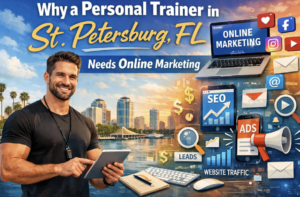

Why a Personal Trainer in St. Petersburg, FL Needs Online Marketing to Grow a Stable, High-Value Client Roster 💪🌴

Online Marketing News for personal trainer near to me St. Petersburg

St. Petersburg is a fitness-forward city with sunshine, waterfront energy, and people who genuinely value feeling good in their bodies. It also has a crowded market. Boutique gyms, independent trainers, group classes, and wellness studios are everywhere, and new options pop up constantly. In a city like this, being a great trainer is only part of the equation. The trainers who stay booked, raise their rates with confidence, and attract the right clients are the ones who show up consistently online.

Online Marketing gives a personal trainer in St. Petersburg a reliable way to be found, trusted, and chosen. It supports the kind of business that does not depend on referrals alone, seasonal traffic, or random spikes of interest. It builds a steady pipeline of people who already want what you offer and are ready to commit.

St. Petersburg Clients Search Online First, Even When They Are Local

Most people do not “shop” for a trainer by driving around. They search on their phone while sitting at their kitchen table, walking the dog, or scrolling after work. They look for proximity, convenience, and a trainer whose vibe feels right. This decision is emotional and personal, and it often happens before the first message is ever sent.

Online Marketing positions you where those decisions are being made. When your name appears in search results, on maps, and in social feeds with clear messaging and real proof, you become the obvious next step. That visibility matters because attention is limited and choices are endless.

A strong foundation starts with the essentials of digital marketing, including your website, search visibility, content, and social presence, all working together as one system. A helpful baseline definition is outlined in this overview of Digital marketing.

Local Visibility Turns “Nearby Interest” into Real Consultations

St. Petersburg is packed with people looking for help with strength, fat loss, mobility, post-injury confidence, sports performance, and healthy routines that stick. Many of them want someone close by, and they want quick clarity. Online Marketing gives them that clarity fast.

Local visibility means showing up when someone searches for training in the area and immediately understanding what you do, who you help, and how to start. It also means your information is accurate and consistent, so people do not hit dead ends or get confused.

A key piece of local discovery is your presence on Google, where many prospects find businesses through Search and Maps. A starting point for that visibility is a Google Business Profile, which supports local discovery and credibility when set up well.

Trust Wins in Fitness, and Online Marketing Builds Trust at Scale

Fitness is personal. People are not only buying workouts. They are buying confidence, accountability, safety, and the belief that this time will be different. Trust is the real product.

Online Marketing builds trust before you ever meet someone. It does this through consistency and proof. Client stories, clear photos and videos, credential highlights, training philosophy, and specific outcomes create certainty. When your messaging is steady across your site, your social platforms, and your local listings, it feels professional and dependable.

Trust also comes from transparency in how you communicate results, offers, and expectations. For any online promotions, disclosures, or claims, it helps to align with established consumer-protection guidance like the FTC’s resources on Online Advertising and Marketing.

Content Marketing Attracts the Right Clients and Filters Out the Wrong Ones

A personal trainer who tries to appeal to everyone usually ends up with inconsistent clients, pricing pressure, and a calendar full of people who are not a fit. Online Marketing solves this by letting you be specific.

When you create content that speaks to your ideal client, the right people lean in. Content can show your training style and your standards. It can explain what you expect from clients. It can highlight how you help beginners feel safe, or how you push athletes with structure. It can show your personality in a way that makes the first message easier for a nervous prospect to send.

Over time, content becomes your silent salesperson. It keeps working when you are training clients, taking time off, or running sessions back-to-back. It also builds momentum, because each piece reinforces the same positioning.

SEO Helps You Get Found Without Paying for Every Click

Social media is powerful, but it is not owned. Search traffic is different. When someone searches for a trainer and finds you organically, the intent is already high. That is a warmer lead, and it typically converts better because the prospect is actively looking.

Search Engine Optimization supports that visibility by helping search engines understand your pages and match them to what people are searching for. This is not about tricks. It is about clarity, structure, and relevance. Google’s official guidance is a strong reference point, including the SEO Starter Guide.

For a St. Petersburg trainer, SEO often pays off best when it emphasizes local relevance, clear service pages, and specific niches. That can include private training, small group training, women’s strength, postnatal fitness, senior mobility, sports conditioning, or injury-aware training, each supported by clear pages and content.

Social Media Marketing Builds Familiarity and Keeps You Top of Mind

People hire familiar. Social media turns you from a stranger into someone they feel like they know. That familiarity is a major advantage in fitness because prospects want a coach they can trust, not just a list of exercises.

Online Marketing on social platforms also supports repeat exposure. Someone might see your content today, save it, follow you next week, and reach out a month later when motivation clicks. That timeline is normal, and it is why consistent posting and clear positioning matter.

Meta’s business resources are a useful reference for organizing your presence and tools across Facebook and Instagram through the Meta Business Help Center.

Paid Ads Let You Scale When You Are Ready to Grow Faster

When your offer is clear and your follow-up is dialed in, paid advertising becomes a lever. It can help you fill a new schedule, launch a small group program, promote a limited-time intake window, or reach specific neighborhoods and demographics.

The biggest benefit of ads for a personal trainer is precision. You can target people likely to care about your service and send them to a simple next step like a consult request, a booking link, or a short application.

Paid advertising also works best when it is tracked and measured, so you know what is bringing in real consultations and not just likes. That measurement is part of making marketing a predictable business tool.

Tracking Turns Online Marketing into a Business Asset, Not a Guessing Game

Busy trainers do not have time for marketing that feels random. Online Marketing becomes far more powerful when you measure what matters. That includes how people find you, what pages they visit, what content drives inquiries, and which campaigns produce consults.

This is where analytics turns attention into insight. Tools like Google Analytics support a clearer view of how your marketing performs so you can double down on what works. Google provides setup guidance in Set up Analytics for a website and or app.

Tracking supports smarter decisions on content topics, ad spend, seasonal promotions, and even which services to feature more heavily based on demand.

Online Marketing Protects Your Business from Seasonal Swings and Referral Droughts

St. Petersburg has seasons. Travel patterns change. People come and go. Schedules shift with school calendars and holidays. Referrals can surge and then go quiet without warning.

Online Marketing creates stability. It keeps a steady stream of awareness flowing into your business so you are not starting from zero every time a client moves, cancels, or finishes a program. It also gives you options, like promoting small group training, adding a low-friction intro offer, or building a waitlist for the next intake period.

When marketing is consistent, your business becomes less fragile and more scalable.

Conclusion

A personal trainer near to me St. Petersburg can be outstanding at coaching and still struggle with inconsistent bookings if visibility and trust are left to chance. Online Marketing fixes that by building a system that helps the right people find you, understand you, trust you, and take the next step.

It supports local discovery, strengthens credibility, fuels referrals, and gives you measurable growth instead of hoping the next month works out. With a clear message, consistent presence, and basic tracking, Online Marketing becomes one of the most practical investments you can make in the long-term health of your training business 🙌🌞

Furnace Replacement in San Jose Runs on Trust, Timing, and Visibility: Why Online Marketing Matters 🔥🏡

Online Marketing News for Furnace Repair in San Jose

San Jose furnace replacement is a high-intent, high-stakes service. When a system fails, homeowners move fast, and they usually choose the company they can find, verify, and contact in minutes. That reality makes online marketing less of a “nice-to-have” and more of the infrastructure that keeps a replacement business steady through seasonal swings, competitive pricing pressure, and shifting customer behavior.

In a market like San Jose, where homeowners are tech-savvy and options are plentiful, online marketing does three critical things at once: it keeps your pipeline consistent, it builds credibility before the first call, and it helps you win jobs even when shoppers compare three to five companies in one sitting. ✅

San Jose Homeowners Search First, Then Decide

Furnace replacement buyers rarely start by driving around looking for trucks. They start with search, maps, reviews, and quick comparisons. They want signs of legitimacy, clarity on services, and proof that your company delivers clean installs and strong follow-through.

Search behavior keeps evolving, too. As Google adds more AI-driven experiences to results, click patterns and visibility strategies shift. A company that relies on “word of mouth only” can still be excellent, but it risks being invisible at the exact moment a homeowner is ready to book. Staying aligned with what’s happening in search is easier when you pay attention to official updates like the Google Search Central Blog and broader product announcements from Google’s Search updates. 📈

Emergency-Replacement Timing Rewards the Most Visible Brand

Furnace replacement is often urgent, but even urgent buyers verify. They look for fast response, financing options, warranty confidence, and clean professionalism. Online marketing supports that split-second trust decision with:

Full and accurate Google Business Profile signals (hours, service areas, photos, categories)
Consistent review generation and review responses
High-converting service pages built around what homeowners actually need
Fast scheduling options and clear next steps

When those elements are in place, you do not just “get more leads.” You get better leads, with less friction, and fewer price-only shoppers. 🛠️

Local Competition Is Loud, and Paid Ads Keep Getting Smarter

In San Jose, HVAC competition is relentless, and the auction for local attention is sophisticated. The companies you compete with are investing in search ads, maps placements, remarketing, and strong creative. Modern paid media is also changing quickly as platforms roll out new automation and AI tooling.

To keep up with what’s working right now, industry outlets like Search Engine Land and Search Engine Journal are useful for tracking trends in PPC, local marketing, and conversion-focused strategy. Staying informed helps a furnace replacement company avoid wasting budget on outdated tactics and instead focus spend on what produces booked estimates and signed installs. 💰

Trust Signals Online Make Pricing Less of a Battle

Furnace replacement is not a commodity, but buyers often treat it like one when they cannot see the difference between companies. Online marketing gives you the space to make the difference obvious without sounding salesy.

Credibility is built through proof, not hype:

Before-and-after install photos and short walkthrough videos
Real customer stories and “what to expect” content
Clear service boundaries, permits, and safety practices
Technician and installer professionalism, cleanliness, and respect for the home
Brand consistency across your website, Google profile, and social channels

Even a simple, well-structured web presence can reduce “quote shopping” and raise close rate because it lets homeowners feel confident that your company is the safest choice. ⭐

Search Is Changing, and Visibility Strategy Must Adapt

AI features in search are influencing how often users click through to websites. That does not mean websites are dead. It means websites must earn the click with stronger positioning, clearer pages, and better alignment with local intent.

Research on changing click behavior, such as this Pew Research Center analysis on AI summaries and clicking patterns, reinforces a practical takeaway for local service businesses: visibility is no longer only about ranking. It is also about how your brand appears across maps, reviews, rich results, and the content that Google and customers choose to surface.

For a San Jose furnace replacement company, that means investing in:

Local pages that match neighborhoods and service areas
Clear service-page structure that answers buyer intent fast
Strong review velocity and owner responses
Authority content that builds confidence in replacements, not just repairs

Privacy, Data, and Measurement Are Evolving

Online marketing is also changing because regulation and platform policies keep tightening. Ad targeting is moving toward privacy-forward approaches and stronger first-party data practices. That shift affects every local business that runs paid campaigns or relies on tracking to understand lead quality.

Industry reporting like Reuters coverage of changes impacting ad models and data practices, including Meta’s advertising challenges in Europe, shows how fast the rules can evolve and why businesses benefit from diversified channels and clean consent-based tracking. One example is this Reuters report on Meta’s ad model and data practices: Austria court ruling on Meta’s ad model and data practices. 🔒

A furnace replacement company does not need to become a policy expert, but it does need marketing that is resilient when platforms change settings, targeting, or attribution.

Industry Spend Confirms the Direction of the Market

Digital advertising and online marketing are not slowing down. The money is following attention, and attention is online. For perspective on the scale and trajectory of digital advertising, reports like the IAB and PwC annual revenue analysis are a solid benchmark, including the IAB/PwC Internet Advertising Revenue Report. 📊

For a local HVAC company, the point is not to compete with national brands on spend. The point is to compete with local peers on clarity, credibility, and consistency, because that is what wins in service-area marketing.

A Simple Definition Keeps the Strategy Grounded

Online marketing can feel like a sprawling universe, but its purpose for a furnace replacement company is straightforward: get found by local buyers, build trust fast, and convert interest into booked installs.

A clean, plain-language foundation helps teams stay aligned. Even the basic definition of digital marketing is worth anchoring to, as outlined in Wikipedia’s Digital marketing overview. From there, the practical plan becomes easier to execute: local visibility, helpful content, trustworthy proof, and conversion-first pages.

Conclusion: Online Marketing Protects Revenue and Builds a Brand That Wins 🏆

A Furnace Replacement San Jose company needs online marketing because the buyer journey is digital, the competition is aggressive, and the platforms that shape visibility are evolving quickly. Strong online marketing creates stability during slow seasons, momentum during busy seasons, and credibility at the exact moment homeowners choose who gets invited into their home.

When your website, local presence, reviews, and paid strategy work together, you stop relying on luck and start building predictable demand. That is how a San Jose furnace replacement business grows with confidence, even as search, ads, and customer expectations keep changing. ✅🔥

Why a BIM Services Florida Company Needs Online Marketing 🚀

Online Marketing News for BIM Services Florida

In today’s digital-driven marketplace, companies offering specialized services—such as Building Information Modeling (BIM) services in Florida—must embrace online marketing in order to stay competitive and visible. A firm providing BIM services is operating in a niche but rapidly evolving construction and infrastructure environment, where decision-makers expect to find expertise online, understand value quickly, and engage seamlessly. Online marketing is not simply a “nice to have”—it is a strategic necessity. By deploying a focused online marketing strategy, a BIM services company can build authority, connect with the right clients, and drive growth. Let’s explore why online marketing is crucial, how it benefits a BIM firm in Florida, and what to focus on to make it work.

Why Online Marketing Matters for BIM Services


A company offering BIM services is often working business-to-business: with general contractors, architects, owners, and engineers. These stakeholders increasingly conduct research online, compare providers by their digital presence, and expect transparent communication and case studies before making decisions. Online marketing helps such a company:

  • Build credibility. When a prospective client researches a BIM provider, they’ll check that firm’s website, read testimonials, examine case studies and thought-leadership content. A robust online presence signals professionalism and capability.

  • Increase visibility. Many construction industry searches now start online—about “BIM services Florida”, “3D coordination BIM”, “construction BIM consulting for Florida projects”. Without a strong digital footprint, the firm may be invisible to clients who are actively searching.

  • Educate clients. BIM services are technical and may not be fully understood by all potential clients. Through content marketing—blogs, videos, whitepapers—the company can educate its target audience about BIM’s value, ROI, workflow improvements and risk mitigation.

  • Generate inbound leads. Instead of wholly relying on referrals or cold outreach, effective online marketing enables inbound lead generation: visitors find the website, download a guide, subscribe to updates, request a demo or consultation.

  • Amplify local reach. For a firm in Florida, local search optimization, region-specific case studies and localized messaging help connect with regional clients (owners, contractors) who prefer or require local expertise and understanding of Florida codes, climate, permitting, etc.

Key Components of an Effective Online Marketing Strategy for a BIM Services Firm


Below are the foundational elements a BIM-services Florida company should focus on:

Website & SEO Optimization
A high-quality website is the digital storefront and foundation of everything. It must clearly articulate what the firm does: BIM modeling, clash detection, 4D/5D simulation, construction coordination, etc. It should showcase relevant Florida projects, expertise with local regulations or construction markets, and client-outcome stories. Search engine optimization (SEO) ensures that when clients search terms like “BIM services Florida”, the firm appears in search results. The discipline of “online advertising and marketing” describes how firms use Internet channels to promote services and track performance. Federal Trade Commission By aligning website content and technical structure with SEO best practices, a BIM firm increases its discoverability and lead-generation potential.

Content Marketing & Thought Leadership
Because BIM services are technical and can appear complex, content marketing plays a huge role. The firm should publish blog posts, case studies, video walkthroughs, seminars/webinars demonstrating the value of BIM: e.g., reduced change orders, shorter schedule, better cost accuracy. Such content positions the company as an expert—not just a vendor. It also attracts organic traffic and supports SEO. According to general definitions, online marketing (or internet marketing) includes all marketing efforts on the internet aimed at influencing users toward business goals. Seobility+1 For a BIM services firm, that means leveraging content to influence decision-makers (owners, design teams, contractors) to choose your services.

Targeted Digital Advertising & Social Media Presence
While organic traffic is important, digital advertising via search (PPC), display, or LinkedIn can accelerate visibility among relevant audiences. For instance, advertising an eBook such as “5 ways BIM saves money on Florida infrastructure projects” to Florida-based contractors and owners can drive qualified leads. The industry news outlet MarTech.org notes how marketing technology (MarTech) and digital strategy are central to visibility, especially as search evolves. MarTech Additionally, having a professional presence on LinkedIn, Instagram (with project visualisations), and YouTube (with BIM process videos) supports brand recognition, trust building, and inbound funnel activation.

Local & Niche Market Focus
Because the firm is in Florida and serving a specific services niche, local optimisation matters. Ensuring local SEO (e.g., “BIM services Orlando”, “BIM for Florida healthcare construction”) enables the firm to appear when clients search locally. Highlighting niche expertise—such as BIM for coastal construction, hurricane resilience, Florida regulatory compliance—creates differentiation. In a competitive marketing landscape, the company can carve its place by speaking directly to those specific needs and using online marketing channels to amplify that message.

Measurement, Analytics & Lead Nurturing
One of the big advantages of online marketing over purely offline methods is measurability: you can track metrics (site traffic, bounce rate, lead downloads, conversion rate), optimize your campaigns, determine ROI. As the marketing news source Search Engine Land shows, in the realm of SEO, PPC and online marketing, trends and insights matter. Search Engine Land For a BIM services company, measuring which content drives contact form submissions, which keywords lead to project enquiries, and which ads produce calls is essential. Also, lead nurturing via email marketing ensures that interested leads are guided from awareness to engagement to contract.

Benefits Specific to BIM Services Companies in Florida


Expanding further, a BIM services Florida company enjoys some unique benefits from online marketing:

  • Competitive differentiation: Many clients may still rely on traditional 2D CAD workflows or non-digital methods. By communicating advanced BIM capabilities online, the firm distinguishes itself as forward-thinking and technologically capable.

  • Project pipeline growth: Florida has a large construction market—commercial, infrastructure, healthcare, coastal resiliency. Online marketing helps tap into that pipeline by capturing attention early in the project lifecycle (design phase) when BIM decisions are still being made.

  • Cost-effectiveness: Traditional marketing (print ads, trade shows) can be expensive and hard to measure. Online marketing allows targeted investment (e.g., geotargeting Florida firms, using LinkedIn for owners/GCs) and returns can be tracked and adjusted in real time.

  • Building authority for future growth: Publishing content around BIM trends—such as 4D scheduling, 5D estimating, clash detection, construction sequencing—positions the firm as an expert. Future clients may find the firm through thought-leadership even if they are not actively looking for BIM services right away.

  • Local trust + global perspective: While serving Florida projects, the online marketing presence allows the firm to show familiarity with local requirements (codes, climate, hurricane risk) while also demonstrating international best practices (BIM standards, ISO 19650, etc). That dual message can appeal to sophisticated owners and design teams.

Conclusion


In summary, a BIM services Florida company based in Florida has everything to gain from embracing online marketing. From building credible authority and increasing visibility to generating qualified leads and measuring performance, online marketing is far from optional—it is strategic. By combining a strong website optimized for search, content marketing that educates and influences, targeted digital advertising, a localized niche message, and robust analytics and nurturing, the firm positions itself to win in a competitive market. The digital transformation of marketing means that firms not adapting are likely to be left behind, while those that master these tools will thrive. Embrace online marketing as your growth engine, invest thoughtfully, and watch your BIM services company shine in Florida’s dynamic construction landscape.