Posts Tagged: The Connection Between Production Equipment and Digital Content Keeps Growing
Online Marketing Spotlight: Why Duvetyne Roll Is Becoming a Must-Have for Professional Productions
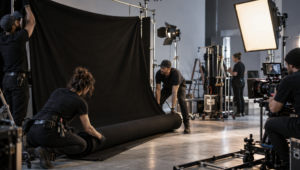
Professional production has always depended on a mix of sophisticated technology and deceptively simple materials. Cameras, lighting systems, digital consoles, LED walls, and editing platforms often receive the most attention, yet some of the most important tools on a production set are far less complicated. Duvetyne has earned a lasting place in that category because of its ability to control light, conceal unwanted areas, create clean visual backgrounds, and help production crews transform spaces quickly.
The growing visibility of specialty production materials also reflects a broader shift taking place across online commerce and digital marketing. Buyers no longer rely exclusively on local suppliers or industry contacts to locate specialized equipment. Production managers, photographers, event planners, filmmakers, theater crews, schools, churches, and corporate media teams increasingly research products online before making purchasing decisions.
That behavior has made specialized products more visible to audiences that may not have encountered them through traditional purchasing channels. As Wikipedia’s overview of digital marketing demonstrates, digital channels have fundamentally changed how companies communicate with customers, distribute information, and connect buyers with products. For professional production suppliers, that creates new opportunities to educate customers about materials that previously remained familiar mainly to industry insiders.
A Practical Material With a Long Production History
Duvetyne is valued primarily because of its dark, matte appearance and ability to absorb light rather than reflect it. In environments where uncontrolled reflections can ruin a photograph, distract an audience, expose backstage equipment, or interfere with video production, that characteristic becomes especially useful.
The material is commonly used for stage masking, temporary backdrops, photography backgrounds, theatrical applications, film sets, studio environments, event production, trade shows, and other situations where crews need an economical method of controlling visual distractions.
Professionals may hang it behind a stage, position it around lighting equipment, use it to cover walls, conceal cables and production hardware, or create darker areas within a set. Because it can serve several purposes, the same material can move from one production requirement to another without requiring highly specialized installation.
For buyers searching for production-ready material, a Duvetyne Roll can provide the quantity and flexibility needed for larger stages, studios, events, and temporary installations.
That versatility is one reason the material continues to maintain relevance even as production technology becomes more sophisticated.
Professional Productions Depend on Better Light Control
Lighting is one of the defining elements of professional visual production. An expensive camera cannot compensate for every problem caused by uncontrolled light. Reflections, spill, bright surfaces, and unwanted highlights can alter the appearance of a scene and require additional work during filming or editing.
Matte black materials can help crews shape the visual environment before recording begins. Instead of trying to correct every unwanted element in post-production, teams can reduce distractions directly on the set.
This approach fits closely with the broader professional production philosophy of controlling as many variables as possible before an audience or camera sees the finished environment. A clean stage or studio frequently depends on what has been intentionally hidden as much as what has been intentionally displayed.
The importance of presentation also extends beyond entertainment. Corporate video departments, universities, houses of worship, conference organizers, livestreaming operations, marketing agencies, and independent creators now produce content that would once have required dedicated television or film facilities.
As online video becomes increasingly integrated with business communication, companies are investing more attention in production quality. The Think with Google marketing resource regularly documents changes in digital consumer behavior and the role of online media in influencing how brands communicate with their audiences. Better visual production has consequently become relevant to a much broader group of organizations.
Online Marketing Is Expanding the Market for Specialized Production Supplies
The internet has changed the path buyers take when researching niche products. A professional stage technician may already know exactly what material is required, while a new content creator may begin with a much broader search related to reducing reflections, creating a black background, or improving a studio environment.
Search engines allow both buyers to eventually reach the same type of specialized product.
That makes educational content particularly important for companies selling professional production supplies. Product pages can describe specifications, but articles, guides, comparisons, and industry resources can explain how those specifications translate into practical applications.
This aligns with guidance from Google Search Central, which emphasizes creating useful content that helps people understand information clearly rather than building pages solely around search-engine tactics.
Online marketing news has increasingly focused on the same principle. Search visibility is becoming connected to usefulness, topical relevance, trustworthy information, and the ability to satisfy specific user intent. Specialty retailers can benefit because they possess the technical product knowledge that general retailers often lack.
The result is a digital marketplace in which niche expertise can become a competitive advantage.
Production Buyers Are Becoming More Research-Oriented
Professional buyers rarely evaluate specialized products based on a product name alone. They may consider dimensions, material weight, installation requirements, durability, color, finish, intended environment, storage, shipping, and compliance requirements before ordering.
That makes detailed information a valuable part of the buying process.
Publications such as Search Engine Land regularly cover developments involving search behavior, content visibility, advertising, and digital discovery. One consistent lesson throughout modern search marketing is that users often move through several stages of research before converting.
A production manager might initially research stage masking options, later compare materials, then locate a supplier after determining the appropriate product. A photographer might discover the material while researching ways to reduce light reflection. An event company might encounter it while looking for temporary black stage covering.
Those separate search paths demonstrate why specialized products benefit from strong informational ecosystems rather than isolated product listings.
Industry suppliers that publish useful educational material can become resources as well as retailers.
Content Authority Matters in Competitive Online Markets
Modern online marketing involves more than simply publishing product pages and waiting for traffic. Companies increasingly build collections of related content designed to demonstrate expertise within a defined subject area.
The Content Marketing Institute has long emphasized the value of creating relevant, useful content for defined audiences. For production suppliers, that can include educational material about staging, fabrics, rigging, lighting control, event preparation, studio setup, theatrical equipment, and related production topics.
This type of content can strengthen the context surrounding individual products. It also creates opportunities for other websites to reference useful resources, which can contribute to stronger online authority over time.
Industry news publications, educational organizations, trade websites, production companies, and technical blogs are more likely to cite pages that contain substantive information than pages consisting primarily of sales copy.
That distinction matters when developing content intended to support long-term organic visibility.
Search Visibility Is Increasingly Connected to Expertise
Search optimization has evolved considerably from the period when repeating keywords could produce significant ranking improvements. Modern search engines evaluate pages using far more sophisticated signals.
Resources such as the Moz Beginner’s Guide to SEO explain how search visibility involves technical accessibility, content quality, links, search intent, and other factors working together.
For niche production companies, expertise can be particularly valuable because specialized subjects naturally require greater explanation. A general online retailer may list a piece of fabric without explaining how it functions in a professional environment. A production-focused supplier can provide information about practical applications, stage requirements, studio considerations, handling, sizing, and complementary equipment.
That depth creates a stronger informational resource for both users and search systems.
It also supports emerging forms of discovery through AI-powered search experiences, where well-structured, clearly written information may be referenced when users seek concise explanations about products and applications.
The Connection Between Production Equipment and Digital Content Keeps Growing
Professional production and online marketing are increasingly interconnected. Brands produce video for websites, social platforms, advertisements, product demonstrations, webinars, streaming channels, training libraries, and corporate communications.
HubSpot’s collection of marketing statistics and industry data reflects the continuing importance of digital content across modern marketing strategies. As organizations produce more media internally, tools once associated primarily with traditional film and theater environments are reaching new categories of users.
A marketing department may now operate a permanent video studio. A manufacturer may create regular product demonstrations. A university may maintain multiple streaming spaces. A church may operate a production system comparable to a small broadcast facility. An ecommerce business may photograph hundreds of products every month.
Each environment creates demand for materials that improve consistency and reduce production problems.
Duvetyne remains relevant because it solves straightforward problems without requiring complicated technology.
Industry Publications Help Specialized Products Reach New Audiences
Online marketing publications play an important role in exposing business audiences to products, trends, and industries outside their usual areas of expertise.
Websites such as Search Engine Journal document how digital discovery continues to change through search engines, social platforms, content marketing, artificial intelligence, ecommerce, and changing consumer behavior.
Those developments matter even for highly specialized physical products.
A niche item that once depended heavily on catalogs, trade shows, referrals, and regional distributors can now be discovered through articles, search results, videos, social content, professional resources, and AI-assisted research.
That expanded visibility does not eliminate the importance of product expertise. It makes expertise more valuable because buyers have access to more choices and more information than ever before.
Companies that explain specialized products accurately and in practical terms have an opportunity to distinguish themselves from generic marketplaces.
Professional Results Often Depend on Simple Solutions
The production industry continuously adopts new technology, but dependable materials remain essential. Not every production challenge requires another electronic device or software platform.
Sometimes the most effective solution is a material that blocks unwanted light, covers an unattractive area, creates visual separation, or allows a crew to transform a location quickly.
Duvetyne fits that role particularly well because its usefulness extends across multiple production environments. Film crews, photographers, theatrical teams, event professionals, content studios, educational institutions, corporate production departments, and independent creators can all encounter situations where controlling the surrounding visual environment becomes essential.
Its continuing use illustrates an important principle of professional production. Technology may change rapidly, but practical tools that solve recurring problems tend to remain valuable.
Conclusion
The growing interest surrounding specialized production materials reflects both changes within the production industry and changes in how professional buyers discover products. More organizations are creating video, livestreams, photography, events, branded content, and digital media, while online search has made professional equipment accessible to audiences far beyond traditional entertainment markets.
Duvetyne continues to stand out because it performs a straightforward but important function. It helps production teams control light, conceal unwanted visual elements, create cleaner environments, and adapt spaces for cameras or audiences.
At the same time, modern online marketing is giving specialized suppliers new ways to explain those applications and reach buyers during the research process. Strong educational content, credible industry references, clear product information, and subject-matter expertise can help niche products earn visibility across traditional search engines and emerging AI-driven discovery platforms.
For an industry increasingly defined by polished visual communication, dependable behind-the-scenes materials remain just as important as the technology positioned in front of them.